Now available in the USA! A novel formulation for horses with PPID
Now available in the USA!
A novel formulation for horses with PPID
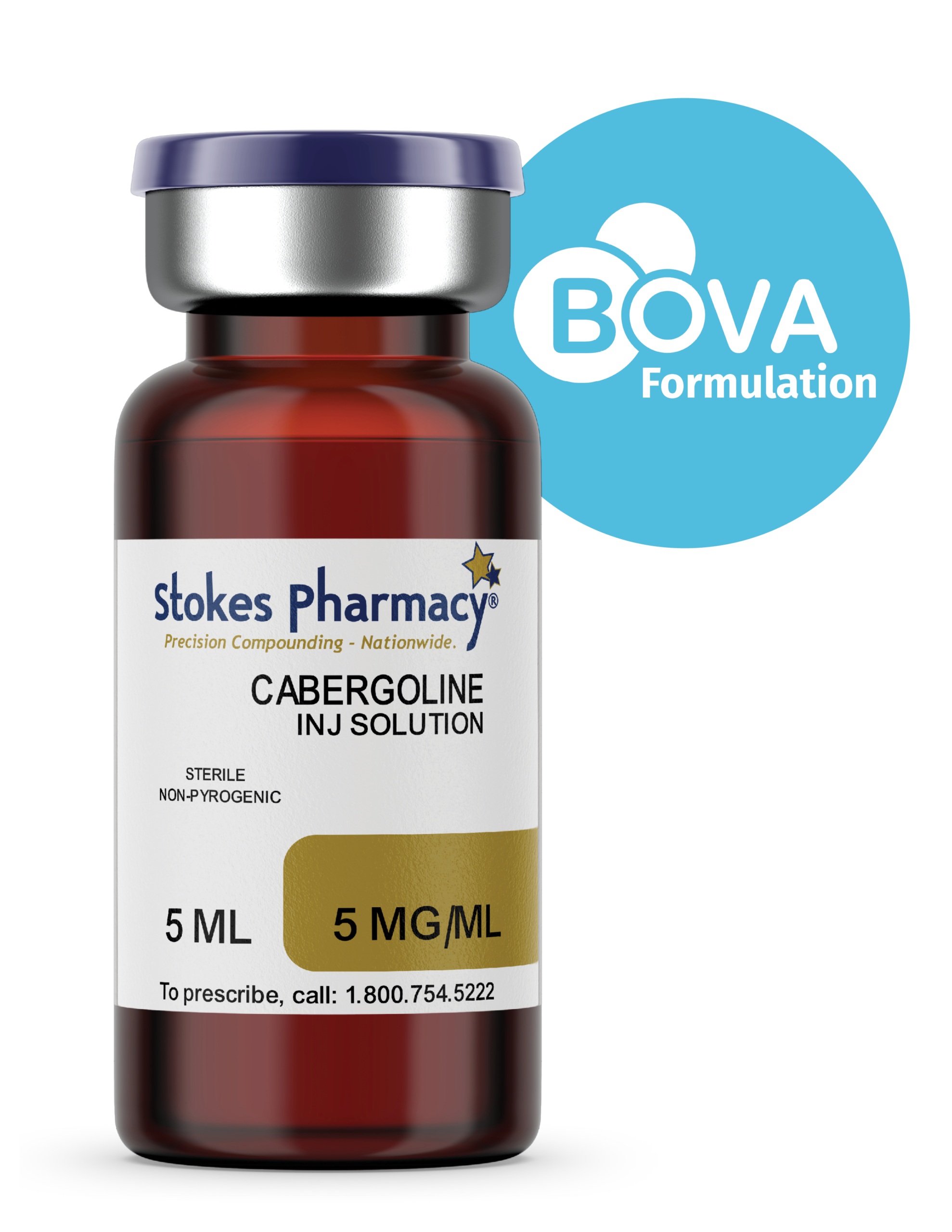
Cabergoline Injection
(Dopamine agonist) 5 mg/mL 5 mL vial
Now available in the USA! A novel formulation for horses with PPID
A novel formulation for horses with PPID
• Once-weekly injection (IM) of under 1 mL
• Ideal for owners who struggle with long-term medication routines
• Suitable for horses where pergolide is ineffective
• Improved horse owner compliance
• Studied in horses under clinical conditions¹
Used increasingly for pituitary pars intermedia dysfunction (PPID) in horses where pergolide is ineffective or where a weekly injection is more practical than daily administration of tablets.
A novel formulation for horses with PPID
• Once-weekly injection (IM) of under 1 mL
• Ideal for owners who struggle with long-term medication routines
• Suitable for horses where pergolide is ineffective
• Improved horse owner compliance
• Studied in horses under clinical conditions1
Used increasingly for pituitary pars intermedia dysfunction (PPID) in horses where pergolide is ineffective or where a weekly injection is more practical than daily administration of tablets.
A novel formulation for horses with PPID
• Once-weekly injection (IM) of under 1 mL
• Ideal for owners who struggle with long-term medication routines
• Suitable for horses where pergolide is ineffective
• Improved horse owner compliance
• Studied in horses under clinical conditions1
Used increasingly for pituitary pars intermedia dysfunction (PPID) in horses where pergolide is ineffective or where a weekly injection is more practical than daily administration of tablets.
Explore the latest findings on extended-release cabergoline and its role in managing pituitary pars intermedia dysfunction in horses.
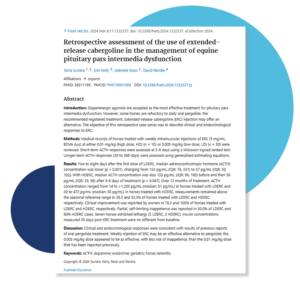
Cabergoline is a dopamine agonist that acts on the pituitary gland to suppress hormone overproduction associated with PPID. Like pergolide, it restores dopaminergic inhibition that is lost due to neurodegeneration between the hypothalamus and pituitary.
Both drugs share the same mechanism of action (dopamine agonism). However:
• Cabergoline may be more potent based on human data and emerging equine evidence
• It is administered as an injection rather than a daily oral medication
• It offers a practical alternative when compliance with oral therapy is poor
There is currently no definitive large-scale equine study proving superiority, but clinical experience is growing.
Injectable cabergoline may be appropriate:
• When owners struggle with daily dosing compliance
• When horses resist oral medications
• In cases with suboptimal response to pergolide
• As a first-line option when compliance concerns are anticipated
Studies show that less than 50% of owners administer pergolide as prescribed, meaning many horses are undertreated.
Challenges include:
• Difficulty administering tablets
• Owner inconsistency
• Long-term daily dosing burden
Cabergoline’s weekly dosing directly addresses this issue.
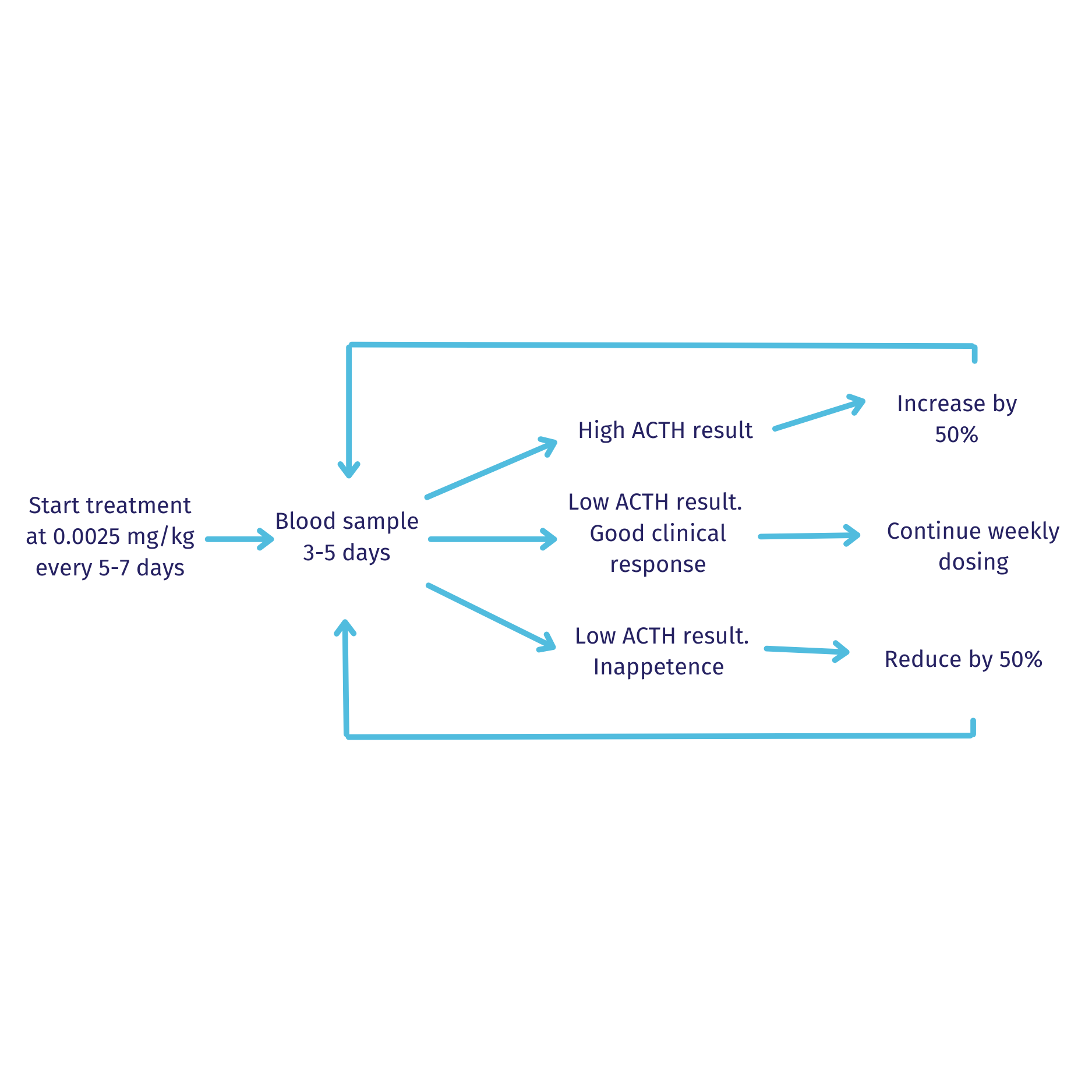
Side effects are similar to those seen with pergolide. The most common adverse effect is inappetence:
• Occurs in ~20–30% of horses depending on dose
• Typically transient (often <24 hours)
• May be accompanied by mild lethargy
Lower starting doses and a gradual escalation in dose to effect can reduce incidence.
• The injection volume is very small and the formulation itself is very inert.
No. Both drugs act via the same mechanism. Combination therapy is not recommended.
Yes. This is commonly indicated but care is required:
PPID and EMS frequently coexist
• If using other medications (e.g., SGLT2 inhibitors), introduce therapies sequentially to monitor appetite and tolerance. Beware introducing cabergoline (or pergolide) in horses that are on SGLT2 inhibitors for fear of reducing appetite and increasing the risk of hyperlipemia.
• Preventing laminitis remains the primary goal
The key benefit is improved real-world treatment success through improved compliance:
• Weekly dosing vs. daily administration
• Avoids challenges with oral delivery
• Reduces risk of inconsistent treatment
Reference: Sundra T, Kelty E, Rossi G, Rendle D. Retrospective assessment of the use of extended-release cabergoline in the management of equine pituitary pars intermedia dysfunction. Front Vet Sci. 2024 Mar 6;11:1332337. doi: 10.3389/fvets.2024.1332337. PMID: 38511195; PMCID: PMC10951098.
We’re currently experiencing higher-than-usual call volumes and iFill registration requests. To help you save time, we encourage veterinary professionals to submit prescriptions using the options below.
Pet Owners Waiting on Prescriptions
Once your veterinarian has sent your prescription to us, please call us directly at 800.754.5222 with your pet’s information, shipping address, and payment method. You do not need to wait for an outbound call from us.
Veterinary Professionals: Submit Prescriptions Without Waiting on Hold
For the quickest service, please use these options, listed in order of preference:
Submitting online, by fax, or by email helps you avoid extended phone wait times. If you don’t yet have an iFill account and need to submit a prescription now, please use fax, email, or phone, since new registrations are currently taking longer than usual to process. Once your urgent orders are in, we recommend registering for an iFill account so that in the future, veterinary teams and pet owners can place orders anytime, with no phone call needed.
Our team is working hard to keep up with increased demand, and we truly appreciate your patience and partnership. Thank you for helping us keep things moving!