
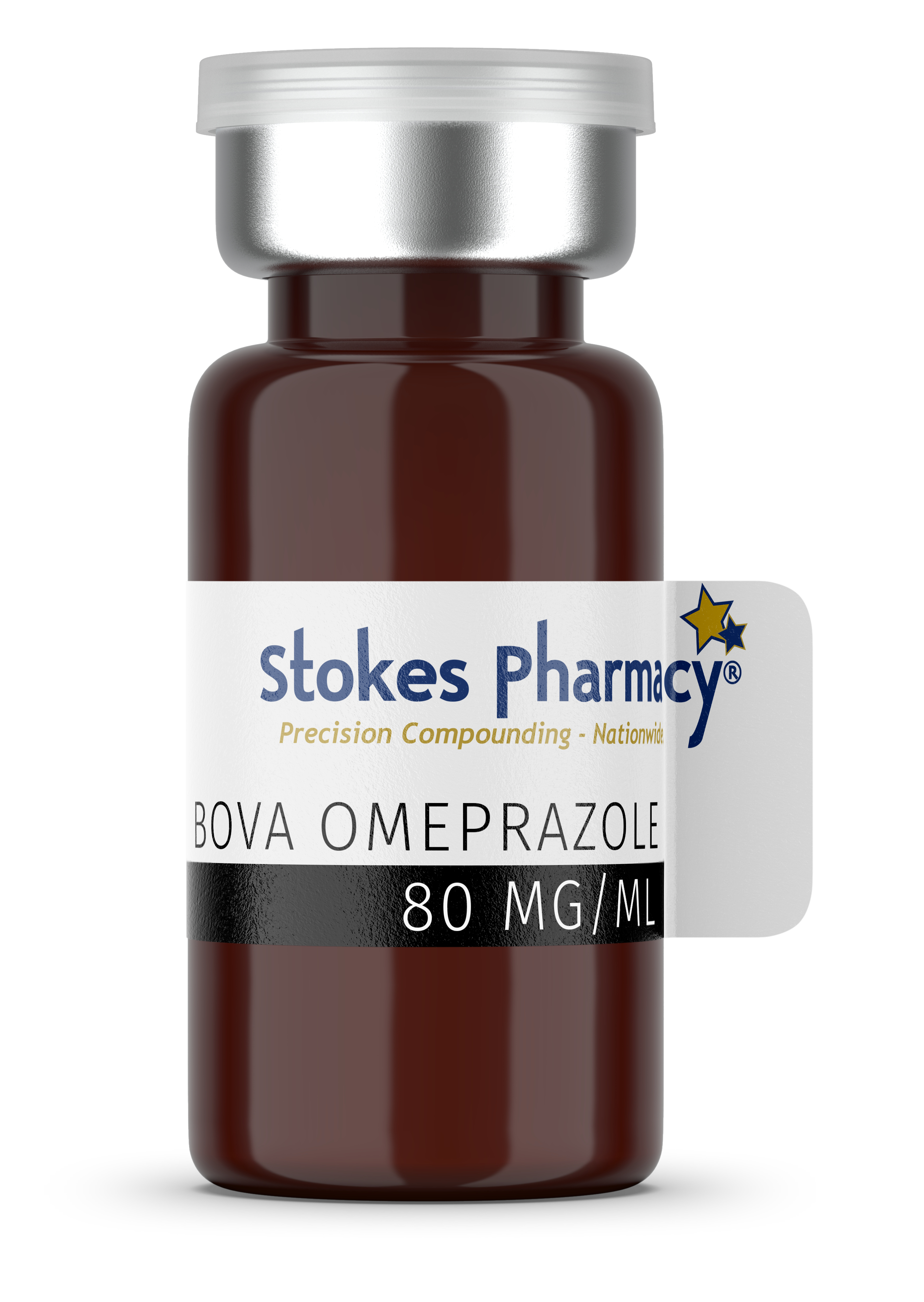

New 80 mg/mL strength, specially formulated for dogs!

Extended-Release Omeprazole

Gastroesophageal Reflux (GOR):

During anesthesia, gastroesophageal reflux may happen, potentially resulting in oesophagitis and, in some cases, the formation of oesophageal strictures. Omeprazole administered orally the evening prior to surgery and a few hours before induction of anesthesia has shown a significant decrease in reflux in dogs¹ ³. For brachycephalic breeds, it is recommended that omeprazole use before anesthesia should be part of the practice protocol². Post-anesthesia regurgitation can manifest after a major anesthetic event for several days. Omeprazole and antiemetics, such as maropitant, are recommended¹.

*Regurgitation can be common in brachycephalic breeds.

New 80 mg/mL strength, specially formulated for dogs!

  • SC or IM injection 
  • Once weekly dose 
  • Single-use vial 

17-55% of anesthetized patients may suffer with reflux⁵ ⁷.

GOR and Surgery

Gastric Ulcers

For treating gastric ulcers in dogs, proton pump inhibitors are favored over H2 receptor antagonists (H2RAs), sucralfate,
and misoprostol⁴.

Gastric Ulcers

For treating gastric ulcers in dogs, proton pump inhibitors are favored over H2 receptor antagonists (H2RAs), sucralfate,
and misoprostol⁴.

Mode of Action

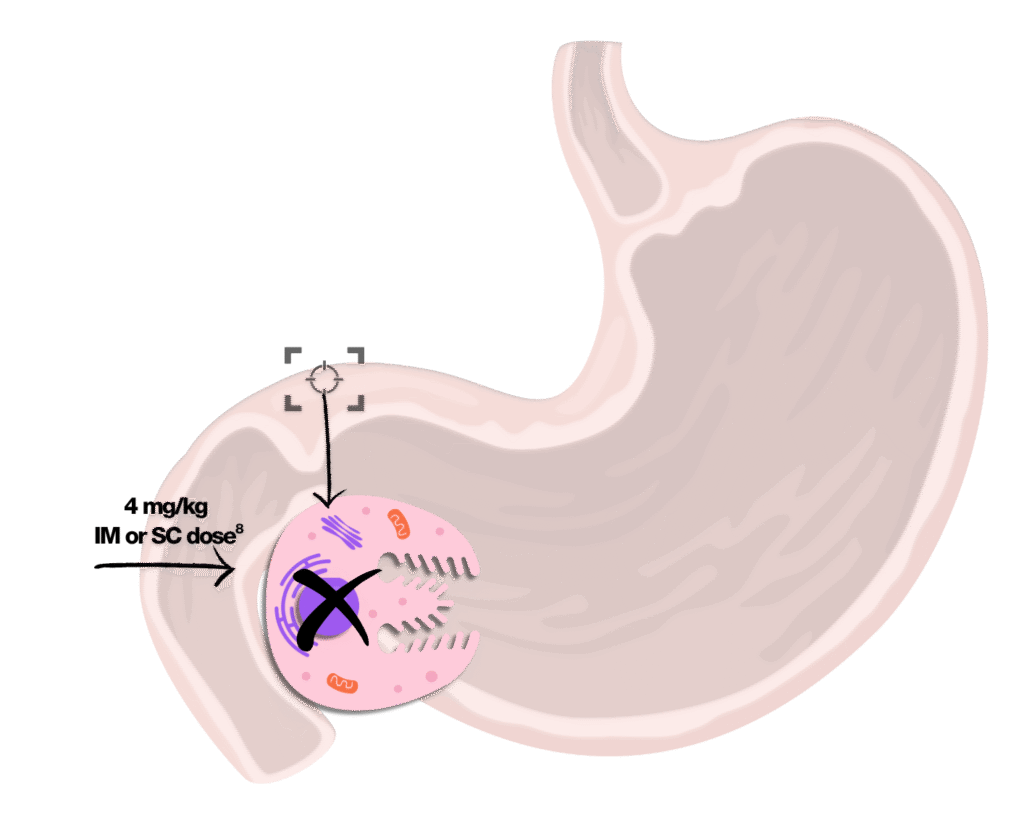
Omeprazole, a racemic mixture of two enantiomers, decreases gastric acid secretion via a precisely targeted mechanism. It serves as a specific inhibitor of the acid pump located in the parietal cell.

Preventive Treatment

THE MEAN ONSET OF ACTION FOR THE LA-OMEP WAS 98.11 MIN (SD 46.39)⁸

Omeprazole Mode of Action

Omeprazole, a racemic mixture of two enantiomers, decreases gastric acid secretion via a precisely targeted mechanism. It serves as a specific inhibitor of the acid pump located in the parietal cell.

Omeprazole Injection Key Points

  • 4 mg/kg subcutaneous (SC) or intramuscular (IM) dose every 5-7 days.
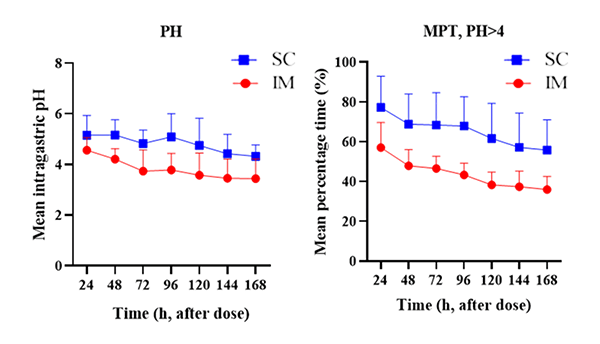
  • The onset of action: mean 98 minutes to reach pH consistently above 4 (range 45-183 minutes)8.
  • The mean number of days the dogs’ pH met established goals for Mean Percentage Time (MPT) pH ≥3 was 5.5 days (range, 3-7) and 5.25 days for MPT pH ≥4 (range, 3-7) (see graph right)8.
  • No major adverse effects were observed in a recent study, including no site reactions.

Preparing the Product for Injection

Warm the Product

We suggest warming to body temperature before administration. This is to reduce the viscosity of the formulation and improve injectability.

Injection Location

SC or IM at the epaxial lumbar site both provided extended suppression of gastric acid production. SC showed a superior pH of >4 over a longer time period.
Proper Administration

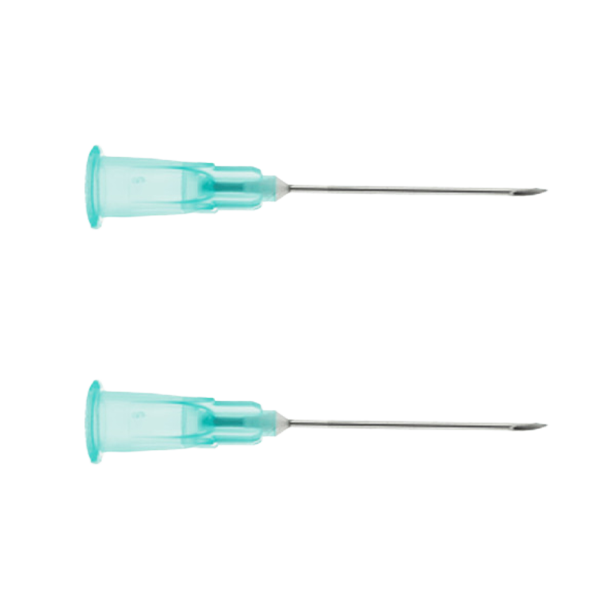
We suggest using a 21g needle to draw up. Then, change to a fresh 21g needle to administer immediately. Do not draw up and wait too long to administer, as the product will soon become viscous.
References:
1. Lotti, F., Twedt, D., Warrit, K., Bryan, S., Vaca, C., Krause, L., Fukushima, K. and Boscan, P. (2021), Effect of two different pre-anaesthetic omeprazole protocols on gastroesophageal reflux incidence and pH in dogs. J Small Anim Pract, 62: 677-682. https://doi.org/10.1111/jsap.13328
2. Downing, F. and Gibson, S. (2018), Anaesthesia of brachycephalic dogs. J Small Anim Pract, 59: 725-733. https://doi.org/10.1111/jsap.12948
3. Panti, A., Bennett, R.C., Corletto, F., Brearley, J., Jeffrey, N. and Mellanby, R.J. (2009), The effect of omeprazole on oesophageal pH in dogs during anaesthesia. Journal of Small Animal Practice, 50: 540-544. https://doi.org/10.1111/j.1748-5827.2009.00818.x
4. Marks SL, Kook PH, Papich MG, Tolbert MK, Willard MD. ACVIM consensus statement: Support for rational administration of gastrointestinal protectants to dogs and cats. J Vet Intern Med. 2018; 32: 1–18. https://doi.org/10.1111/jvim.15337
5. Wilson D V, Evans A T and Miller R (2005). Effects of preanesthetic administration of morphine on gastroesophageal reflux and regurgitation during anesthesia in dogs, Am J Vet Res 66:386-390.
6. Wilson D V, Evans A T and Mauer W A (2006a). Influence of metoclopramide on gastroesophageal reflux in anesthetized dogs, Am J Vet Res 67: 26-31.
7. Wilson D V, Boruta D T and Evans A T (2006b). Influence of halothane, isoflurane and sevoflurane on gastroesophageal reflux during anesthesia in dogs, Am J Vet Res 67: 1,821-1,825.
8. Odunayo A, Galyon G, Price J, Hecht S, Tolbert MK. Evaluation of a long-acting injectable formulation of omeprazole in healthy dogs. J Vet Intern Med. 2022 Jul;36(4):1416-1421. doi:
10. 1111/jvim.16440. Epub 2022 May 12. PMID: 35546514; PMCID: PMC9308438.

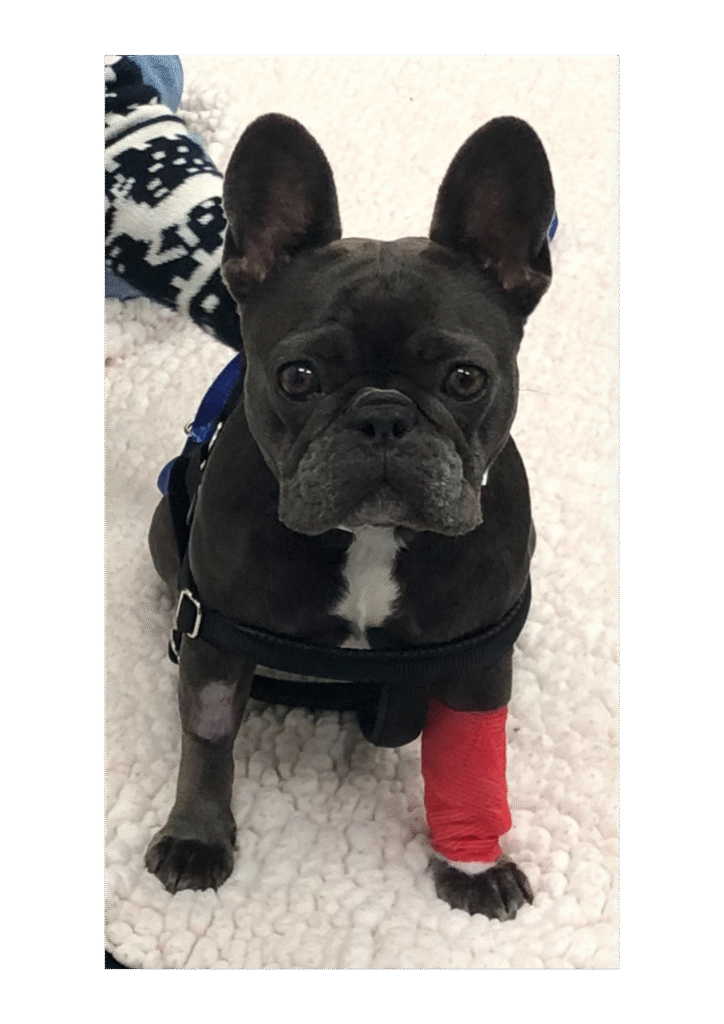
Cast Report: Frankie

This case report has been provided by Fergus Allerton BSc BVSc CertSAM DipECVIM-CA FRCVS, Willows Veterinary Centre & Referral Service, UK

Preventive Treatment

Frankie, a 2 year 6 month old spayed French Bull Dog, had a prolonged (> 1 year) history of increasing frequency regurgitation. The clinical signs had been progressive. While she had started out with just occasional reflux during exercise, by October 2023, Frankie was regurgitating multiple times each day and had lost a considerable amount of weight. A hiatal hernia was suspected based on the clinical history and breed predisposition and Frankie was initially treated with metoclopramide and omeprazole by mouth. A transient and partial improvement in clinical signs was observed but overall, the response to treatment was disappointing. Furthermore, Frankie developed diarrhea and vomiting while on the omeprazole treatment further aggravating her weight loss.

Given the failure of conservative management strategies, Frankie underwent hiatal hernia repair through a ventral midline celiotomy in November 2023. Frankie recovered well from the procedure and was soon eating and behaving normally. During her post-operative management, she received repeated intramuscular injections of a long-acting omeprazole formulation that was continued for 3 weeks. No adverse effects were observed. She regurgitated only a couple of times in the week after the procedure and has continued to go from strength to strength ever since. She has now regained all her lost weight and is enjoying getting outside in the Spring sunshine.

Vet Comment:
Hiatal hernias are a common issue in French Bull dogs. Happily, the
majority can be successfully controlled with conservative management and BOAS correction. Frankie was a particularly challenging case and ultimately required hernia repair to resolve her clinical signs. A further complication for her was the poor tolerance of oral omeprazole. This is a cornerstone treatment for dogs with reflux disease but was not suitable for Frankie. The option of a long-acting injectable supported her recovery post-surgery and helped achieve a positive outcome. It is great to see and hear how well Frankie is doing now.

Owner Comment:
Unfortunately for our complicated Frenchie, she struggled with the omeprazole in tablet form but the injection allowed Frankie to have a normal life. Now she can finally play with other dogs and go on longer walks.